IRS LLC RegistrationWhy a personal login misses the company
You logged in with your own account and the company was not there. That is the login, not the company.
Describe the screen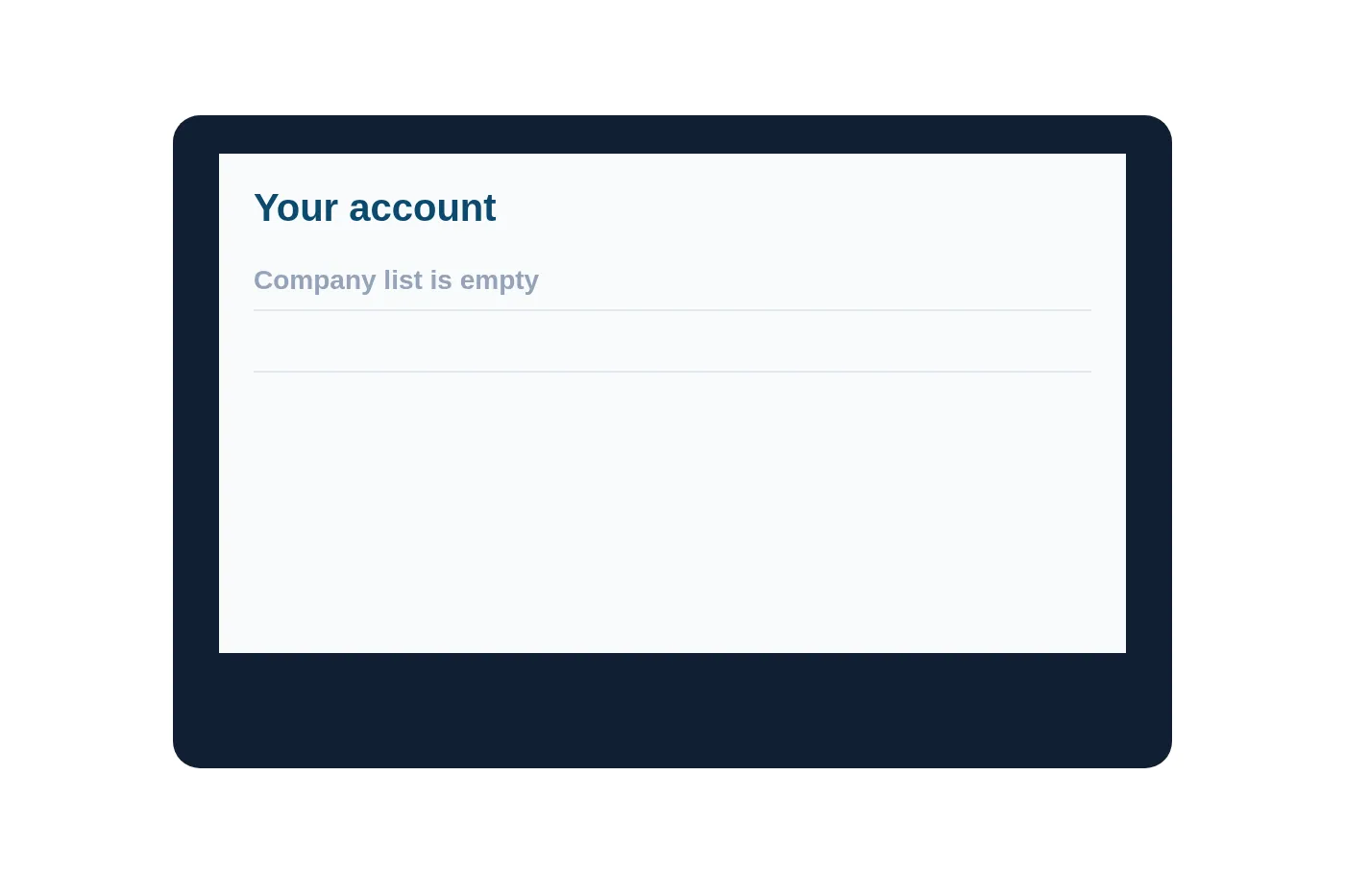
Two taxpayers, one kitchen table.
A personal online account shows the person's wages, the person's notices, and the person's balance. A company with its own number does not live inside that screen by default. Owners open the personal account, see no company, and decide the registration failed. The account did not fail. It was never the roll.
The responsible party on the number is a human. That person can open what the company needs. The password stays with that person. We can look at a shared screen. We cannot, and will not, take the password, store it, or type it. If a notice asks the company for papers, the company produces the papers. Speaking as the company inside an examination is not work we take.
You can stand in the right building and still be looking at the wrong wall, the way a busy room covered in other people's names will not show the company you came to find. A personal login is that kind of wall. Real, busy, and not the company. The screen can be in perfect order and still omit the company, because the person and the company are two taxpayers. The relief is knowing the account did not fail.
Which screen is worth opening.
If the company is disregarded and has no employees, there may be very little for a company account to show, because the activity is on the owner's return. Opening a portal will not create a federal enrollment that was never offered. The certificate still did the creating.
If the company is an S, the entity return and the schedule that should reach the owner are the papers to find. A personal account that lacks the company is a clue to go find that return, not a clue to buy a registration. If the acceptance letter is missing, say the acceptance is missing. Those words are more useful than a screenshot of an empty menu.
If employees are paid, the provider's screen is a third place, separate from both the personal login and the company account at the agency. We set that provider up. You run payday. Mixing those three screens is how a deposit gets coded to the wrong taxpayer.
Bring the corner of any notice and the date. Match it to a month. A closed month can answer a letter. An open month usually cannot, and we will say so before anyone drafts a reply.
Keep reading.
Describe the screen you see
Personal account, company account, or a provider screen. No password in the note.

You will be talking to the Steven Palmieri practice.